My Blog List

Thursday, September 15, 2022

Simplifying charcuterie


To me, this is overdone, too crowded.

Six years ago, when I first moved into the cottage, everybody wanted to come for happy hour so they could see my new digs. We had guests every night, and it was fun and, indeed, happy. Jordan and I put out a cutting board with a couple of meat or salami choices and two or three cheeses—a wonderful cheddar with blue cheese layered in or sometimes cheddar from the Cotswolds. We didn’t call it chaucuterie because, if my memory is correct, that term has only become popular since then.
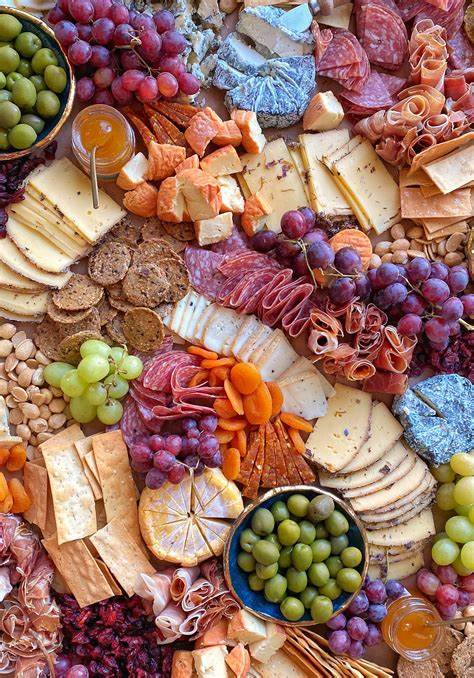
Today, charcuterie boards are all the fashion. There are books about how to do them, and you can take classes in constructing them. Hostesses seem to be in fierce competition to see who can have the most elaborate, the most innovative board. Frankly, I think it’s gotten out of hand. For one thing, those elaborate, overflowing board may be beautiful, but they’re not practical. How do you pull out a piece of cheese or a pickle spear or whatever without touching all the food on the platter? I was raised to believe if you touched it, you ate it. I want a little space between items—and a pickle fork.

If you can shop at a store with a good deli counter, you’ll have a much wider range of choices. You really need three things on your board:

Meat – figure 2 to 3 ounces per person and try for variety of taste and texture. Cured meats are usually used, and pork is traditional, but you can include other meats. Salami is always a good choice—either soft or hard; I like mortadella—a fine, soft Italian meat (think bologna) with little pockets of pork fat; you can use prosciutto, bresaola, chorizo, ham, pepperoni. I love a good pate. Most people think pate is duck or chicken liver and those are most common, but pâté can be made of beef, game, fish, even vegetables. It is usually richly seasoned with herbs, spices, and either wine or brandy. Often, they are made in a loaf or terrine pan, chilled, and sliced. A pate is smooth enough to spread. Ingredients in a terrine are coarsely chopped.

Cheese – again, 2 to 3 ounces per person. Use a soft cheese, like brie, goat cheese (chevre) or camembert – if the cheese will be messy on the board, place it on a small plate or coaster or piece of parchment; add a semi-soft or hard cheese – cheddar, gouda, manchego; to add interest to your board, choose an unusual cheese—like blue or gorgonzola. Slice the cheese before arranging the board—if people have to slice their own pieces, your board will soon be a mess.

Bread – you can hardly go wrong here with anything from lavash to Ritz crackers. Try cocktail rye or baguette slices. Sometimes we use sesame rice crackers but be aware they break easily. Try Melba toast or water wafers. Most groceries have a wide selection of crackers.

Some hosts consider a meat and cheese board ample enough; others like to add fruit and what I call garnishes:

Fruit – grapes are the standby and easiest, but you can do chunks of melon in season, strawberries (halve them if large), figs. Avoid soft fruits, like bananas and raspberries, and blueberries which roll around. You can also offer a tiny pot of jam or chutney. In winter, dried fruits may be your best choice.

Garnishes – again, let your imagination rule. Add anything from cornichons and olives or tapenade to nuts or dips; smoked shellfish or mild white anchovies are nice but put them in a small dish so they don’t touch the non-fishy items. How about tiny cherry tomatoes or pickled onions. Bits of fresh herbs tucked here and there add great eye appeal.

Note: you can do vegan and gluten-free boards if you or a guest have special needs.

Covid really changed our attitude toward charcuterie because we were all so conscious of sanitation. Boards faded from our happy hour about that time, at least in my cottage. You may still be leery of the communal aspect of charcuterie, but there are options: Cone charcuterie is layered in pre-made cones (no, I don’t know where to get them). Some hostesses layer ingredients in small Mason jars, preferably wide-mouth, and call it jarcuterie. Or you can do charcuterie kebabs. With these alternative forms, it might be good to provide small plates and a fork to each guest—or a lot of toothpicks.

The good thing about these boards is that you can tailor them to your taste and the specific situation. Let your imagination run and have fun with it. And take pictures.


Thursday, September 8, 2022

Beyond the bagel


not my picture
unfortunately

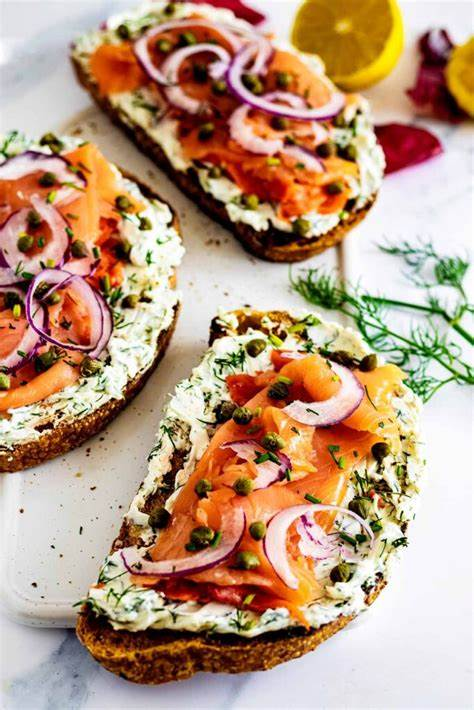
Let’s begin with a basic fact: lox and smoked salmon are not the same. Lox is salt cured; if it’s called Nova lox, it simply means it’s sourced from Nova Scotia. Smoked salmon can be either hot smoked or cold smoked. Hot smoked, as the name implies, is cooked usually over a smoke fire (the best I ever had was in Oregon where it was smoked over coals on a tipi-shaped frame, the way indigenous people did it for centuries). It has a firmer texture, like roast or grilled salmon, and a stronger flavor.

Before it is smoked, cold smoked salmon is either brined, as you would brine a chicken or even a pickle, or dry cured, covered with a mixture of spices, typically heavy on sugar and salt. Then the salmon is exposed to smoke, but at with much less intensity than hot smoked. Cold smoked is typically served in paper thin slices and has a delicate flavor.

Confession: My palate is not sophisticated enough to distinguish good Nova lox and cold smoked salmon, unless the latter is really oaky. But it’s cold smoked salmon I want to talk about today. Another confession: it’s a luxury I routinely keep in my refrigerator. I buy it pre-packaged at Central Market, but it is available at many groceries. You can try several labels until you settle on the one you like. I used to ask the deli staff to slice it from their big piece of salmon until one of them told me the packaged was fresher. Sometimes you’ll see packages labeled gravlax—that’s Scandinavian salmon cured in sugar, salt, and dill. You can do that at home (I’ve done it to prove a point, but it’s easier to buy it). Central Market also sometimes offers cold smoked trout, which is quite good.

So what beyond the bagel do you do with smoked salmon? I’ve got a couple of favorites for you:

Smoked salmon toasts with sweet onion

Sourdough or baguette slices

1 garlic clove, skinned and cut in half

Softened butter

Tomato—you can use a large tomato or a Roma, thinly sliced or halved cherry tomatoes, though the halves might tend to fall of the bread

Smoked salmon – at least 2 oz. per person

Slices of small, sweet onion

Olive oil

Lemon juice to taste—not too much!

Salt and pepper

Decorative greens such as watercress or basil for garnish

If you want this to be an entrée, use thick slices of artisan bread; I usually serve it as an appetizer, and I use baguette slices. I count on three baguette slices per person.

Toast the bread. While it is still warm, rub with the cut side of the garlic. Butter the bread generously (the butter acts as a barrier to keep the toast from getting soggy when you add the tomato). Add tomato slices, slices of salmon, and onion. Drizzle with olive oil and lemon juice. You may want to pepper the tomato lightly, but I’d advise against salt because the salmon is salty. Garnish and serve immediately.

Optional: sprinkle a few capers over the toasts

A variation: this is also delicious if you use sardines instead of salmon. In that case, a bit of salt is warranted.

Smoked salmon with caviar

This recipe called for making pizza dough for the base, but I’m not a pizza fan and making dough from scratch was not on my agenda. I used flour tortillas, but if you can find individual small, prepared pizzas (Boboli or some other brand), you can use that. You might also try a round of puff pastry. I served one tortilla each as an entrée to a friend who shares my taste for smoked salmon.

One large flour tortilla or small pizza circle per person

Olive oil

3 oz. crème fraiche per person

2 oz. smoked salmon per person

1 ox. Black caviar per person (cheap is fine)

           Brush the pastry (whatever you use) with olive oil and toast lightly. Let is cool a bit, then cover with crème fraiche. Top that with smoked salmon, arranged as decoratively as you can, and spoon a bit of caviar into the center. For easier consumption, you might halve the individual servings. Garnish with a bit of basil or watercress or flat leaf parsley.

I had one more recipe in mind, but that’s enough for one day. Let me know if you want more about smoked salmon. I have in mind potato salad with smoked salmon or directions for at-home gravlax (it’s not as intimidating as it sounds).


Thursday, September 1, 2022

Variations on a recipe


Once school starts, everyone seems busier, time is somehow compressed. Maybe it’s something subliminal, like the days are getting shorter or an impending sense that the holidays, busiest time of the year, are not far off. Maybe it’s just that the lazy days of summer are over, and there’s less time for everything—including fixing supper.

I like to keep a rotisserie chicken or two on hand for just such evenings when we’re rushed. Jordan has convinced me that they are easier to bone if you do it right away when you get home from the store, when the chicken is still warm. Not only is it easier to bone, but it takes up a lot less room in the freezer. You can pull it out, cut into chunks, have a casserole in the oven in no time aat all. One problem is that recipes usually call for three or four cups chicken, and I find we don’t always get that much off one bird.

The other night with Jordan out of town I used a rotisserie chicken to fix a simple chicken casserole Christian and Jacob. I thought was delicious.

Chicken Casserole

4 cups chopped, cooked chicken

1 can cream of mushroom soup

1 cup sour cream

½ sleeve Ritz crackers

½ stick butter, melted

Lightly spray a casserole dish. Distribute chicken evenly in the dish. Mix sour cream and mushroom soup and pour over chicken. Crush the Ritz crackers—I love the taste of Ritz and they crumble so much more easily than saltines. Just put them in a baggie and whack at them a bit with your rolling pin. You do have a rolling pin, don’t you? Never hurts to ask in this day of baking mixes.

Spread crumbs evenly over casserole and drizzle with butter. Bake at 350 for 20 or 30 minutes.

I have a lazy habit of eating cold leftovers for lunch—lazy because I don’t want to stop what I’m doing and fix something. But I must admit this wasn’t as good the next day. Probably I should have reheated it.

Since I fixed that, I’ve come across variations. Here’s another version:

Diced chicken

1 can cream of mushroom soup

1 can cream of celery soup

Pepperidge Farm stuffing

1 c. butter

1-1/2 cups chicken broth

           Bake at 425 for 20 minutes.

Yet another, this with the name, “Grandma’s Chicken Casserole.”

3 cups cooked chicken

2 cans cream of mushroom soup

2 cups grated cheddar cheese

3 cups crushed Ritz crackers

Bake at 350.

And, finally, one with more variation, called “No Peek Chicken”

1 box Uncle Ben’s Long Grain Wild Rice (original recipe—good luck if you can find that--all I find is the instant version)

1 can cream of mushroom soup

1 can cream of celery soup

1 can water

Chicken breast or tenders.

Now here’s a bit of speculation on my part. The recipe calls for raw chicken and specifies cooking it for two and a half hours at 350, tightly covered with foil. Take the name seriously, and do NOT peek. If you use rotisserie chicken, you could cut the time down and take advantage of the “instant” feature of the rice. I haven’t tried it, so all I can advise is playing with the time. Maybe an hour?

And the next time someone belittles the 1950s trick of cooking with canned soup just smile and walk away. You know better!


Thursday, August 25, 2022

A cooking triumph


salmon en croute


Since I recently confessed to one or more cooking failures, I want to share a triumph with you this week. It involves one of my favorite foods and a culinary technique that has intrigued but intimidated me for a while. Last weekend, I made salmon en croute. I’ve always wanted to try Beef Wellington, but I think that was more fascination with technique. I like salmon better than beef. For some time now I’ve collected recipes for salmon in a crust, ranging from complicated to the writer who said she just winged it and used common sense. I aimed for somewhere in the middle

I always have puff pastry sheets in the freezer, probably in the hope I’ll make spanakopita, so that was no problem. Next came a layer of sauteed mushrooms, with onion and garlic. Then the salmon: Colin and I recently split a case of canned line-caught, wild King salmon direct from Alaska. I’ve been buying tuna by the case from a small, independent fishing couple in Oregon for years. Their salmon supply dried up—if I understand it correctly, the situation is due to corporate control of fishing grounds and the fact that most salmon nowadays is farm raised.

One caution I’ve read too often from fishmongers is that farmed fish, salmon but more especially tilapia, can easily be contaminated. My tuna lady recommended a company called Alaska Gold. It’s expensive, but Colin and I thought it was worth it. So, after the long story, here’s the short version: I substituted canned salmon for the fresh filet the recipe called for. I don’t think it would be as good with commercial brands. The salmon I used is cooked once rather than the usual twice, with no additives or preservatives except salt.

Back to the salmon en croute: after the salmon came a layer of spinach. The recipe did not call for goat cheese, but I had some spreadable, and I spooned dollops on top of the spinach. Then came the top layer of pastry and an egg wash. It looked lovely and tasted wonderful. Here’s what I did.

For the mushroom layer:

1 Tbsp. olive oil

½ medium onion, chopped

1 cup fresh mushrooms, chopped

1 tsp. minced garlic.

Sauté onion until translucent; add mushrooms and garlic and cook, stirring, until the mushrooms are soft. Season with salt and pepper and reserve in a small bowl.

For the spinach layer:

Sauté garlic quickly, being sure not to let it burn; Add spinach by handfuls, as it cooks down, and stir until all is wilted. Season with salt and pepper.

Assembly:

2 sheets puff pastry

Salmon

Goat cheese

1 egg

           Coat a work surface with flour and lay out one sheet of pastry. Spread mushroom mixture over it, stopping ½ inch from the edges all the way around.

Center salmon on mushroom mixture. I halved the recipe and used one 7 oz. can salmon in chunks. These directions are for the full recipe, and you’d need two cans or one 14 oz filet (skinned) or two 7 oz. filets might actually work better. Evenly distribute spinach over the salmon and then top with dollops or slices of goat cheese. Place remaining sheet of pastry over and press to seal the edges.

Brush the top pastry with beaten egg and transfer the whole thing to a baking sheet. This is easier said than done. I’d advise two big spatulas and, if possible, an extra set of hands. Bake at 350o until crust is golden brown. Let it cool slightly before cutting.

You can serve this with a dill sauce of lemon, mayonnaise, and a touch of mustard, but I thought it was just fine without the sauce. Should serve four nicely. Half the recipe served two generously with a slice left for lunch the next day. It is, however, not nearly as good the next day. The pastry gets a bit tough.

Thursday, August 18, 2022

Kitchen fail--and eggplant reconsidered


I have some good friends who like eggplant, though my family has threatened death and destruction if I ever serve it again. I told Colin I’d never served it to him when he was a child, and he retorted, “Oh yes you did, and it was slimy.” So maybe I didn’t know to bake it instead of fry it. My friend Teddy loves it, and I have made two different eggplant dinners for Sue and him, and they’ve both been enthusiastic. Kathie also likes it, and I keep meaning to make her a dish. Meantime, one night recently, I made a recipe for Jean that sounded so good to me. Layered tomato and eggplant. What could go wrong?

When I read the recipe carefully that morning, I found it a bit more complicated than I thought. First off, you had to peel the eggplant, which is more difficult and perilous than I expected. I accomplished it without cutting myself, which made me proud. Then you cubed it and boiled it until soft. Drain and mash. Add onions, garlic, beaten egg, breadcrumbs, and pesto. So far so good. I put that mixture in the fridge, so that I could assemble the dish at the last minute. As I worked, I thought with great satisfaction about how good it sounded.

Jordan was here for happy hour when Jean arrived, so we sat, caught up on each other’s news, etc. But I finally decided it was time to cook. Easy-peasy: layer tomato, then eggplant mixture, then more tomato and top with grated cheddar. Bake at 350 for thirty minutes. When it came out of the oven, we both raved about how good it looked.

Jean liked it, ate two helpings; I did not. I could think of several things that would have been better: the onions should have been sauteed and softened first, the eggplant should have been sliced—as it was it got lost, the pesto was unnecessary, the cheddar too bold.

What I would do another time—if there is another time—is layer tomatoes (salt and pepper them), then slices of unpeeled eggplant, sauteed onion rings, a milder cheese like Monterrey Jack, and then more tomatoes. Cover liberally with grated Monterry Jack or slices of provolone. Mind you, this is not a recipe: it’s just a thought.

Since my kitchen fail, I’ve realized eggplant is ubiquitous, probably because it’s in season right now. But if you look online, you’ll see it stuffed, grilled, fried, baked, rolled, used in salads and spreads, served caprese style. I’ve seen recipes for curried eggplant (Indian), hot and sour (Vietnamese), Greek-style. I might even try the pasta caponata (caponata is a Middle Eastern spread of eggplant, fried and chopped, seasoned with olive oil, onion, garlic, tomatoes, lemon, capers and probably whatever else strikes your fancy). And there’s always babaganoush which is good if it’s not too strong with garlic. But I’ll pass on eggplant churros. Honest, I saw a recipe!

Here’s my favorite eggplant recipe:

Eggplant parmesan

2 eggplants

2 lbs. ground beef

2 cloves garlic, crushed

2 14-oz. cans diced tomatoes

2 6-oz. cans tomato paste

1 tsp. salt

Pepper to taste

Pinch of sugar

3 c. breadcrumbs (about 6 slices)

⅔ c. grated Parmesan

Provolone cheese slices

Vegetable oil, as needed; start with 3 Tbsp. but eggplant really soaks up oil and you may need to add more as you go along

Halve two eggplants lengthwise and hollow out, leaving shells about ¼ inch thick. Cube eggplant that you’ve cut out and sauté in vegetable oil until soft. Drain well on paper towels. Brown beef; add garlic, tomatoes, tomato paste, salt, pepper, and sugar and simmer 15 minutes.  Stir in breadcrumbs, sautéed eggplant, and Parmesan.

Spoon into eggplant shells. It won’t all fit, so use an extra side dish. Top with sliced provolone and bake. Will probably feed five, but only four get the eggplant halves. The fifth person has to eat out of a small oven dish.

Thursday, August 11, 2022

Cooking lessons


salmon cakes
Yes, I till eat them!

With my “away” kids visiting serially last week, I tried to cook according to each one’s taste—and taught myself some cooking lessons along the way. Jamie was first, and I fixed two old favorites the way I always have—squash casserole and green noodles. No lessons there.

But for Colin, who came next, I tried to experiment. Colin and I both love salmon and have together just invested in a case of wild-caught canned King salmon straight from a fishermen’s coop in Alaska. For his dinner, though, I used a couple of Wild Planet cans I had on hand, also labeled wild-caught (I do not want farm-raised salmon which I believe has health hazards). I found a recipe that called for smoked salmon mixed into the cakes. Why not? We both love lox. At first, I thought I’d make the cakes my usual way and just stir in the smoked salmon. But then I decided to follow the recipe and also add capers and dill—I think it was the capers that did it in, though Colin gamely said the more he ate, the better he liked it. I threw the recipe away. (This is my second try at smoked salmon in salmon cakes, and I hereby give up--each is too good to mess with it by mxing them.)

But there was a take-away. All my life I’ve used egg to bind salmon patties—that’s what my mom did. Believe me, I’ve made a lot of them over a long lifetime. Disgusting Vintage Foods Facebook posts occasionally show salmon cakes and ask querulously, “Does anybody still eat these?” My answer is a resounding “Yes!” I love them. But the unsuccessful recipe used mayo instead of egg to bind—small amount of both mayo and dried crumbs.

I tried this last night with the first can of the good new salmon, and it was great. Cakes held together better. All you need is salmon, salt and pepper, crumbs, and mayo, though I added a dash of Worcestershire and a pinch of dry mustard.

Lesson two came with Megan, who likes light, summer salads and who loves Asian food. I found an easy Asian chicken salad. For some time, I’ve been unhappy with boneless, skinless chicken breast that I cooked for salads, casseroles, etc. It was tough, no matter how I cooked it, so I used rotisserie chicken which is generally high in salt and cost. This recipe had directions for cooking chicken, and I followed them: dry the chicken with paper towels, salt and pepper generously, and get a good sear, a nice brown crust, on one side only. Reduce heat, turn chicken, add ¼ cup water (I had one whole breast), cover and simmer until tender and done. Much better. And the salad was delicious—Megan loved it. (A side lesson: Napa cabbage, which the recipe called for, is $11/head! Megan had to settle for plain, shredded cabbage.)

My third lesson came just two nights ago, with the Burtons back home and our first meal together. They love a pork tenderloin, but I find the meat dry (I think the same thing about a plain chicken breast). Usually I don’t buy tenderloins, but they were on sale, already marinated. First part of the lesson: most recipes call for marinating the meat yourself, which surely makes the cut cheaper. Besides, if it’s pre-marinated, you’re committed to a flavor before you begin. This one was marinated with herbs and Dijon mustard, and it was good, but I won’t routinely buy pre-marinated.

My mother taught me to save bits and pieces of this and that, a habit that sometimes frustrates Jordan as my small icebox dishes jump out of the freezer at her. But Mom lived through the Depression, and she saved every tiny leftover. I had saved the juice from cooking chicken for Megan’s salad, and I found one other similar, small container in the freezer. So I defrosted them.

Chicken fat rises to the top when refrigerated or frozen, so I scraped it off into a skillet, melted it, and added enough flour to make a roux. Then I made a sauce with the drippings. I had some chicken broth ready to go but didn’t need it. The sauce was good, the pork tender and moist. It was a win!

I had tucked potatoes and carrots around the tenderloin as it cooked, and the sauce/gravy was good on them too. I meant to eat the leftovers last night, but I ate two salmon cakes and all the leftover roasted baby carrots (I love cooked carrots but its one thing I can’t serve the family) and I was full. So lunch today is the remaining salmon cake and potatoes in gravy. Sounds good to me!

As I read more and more about Helen Corbitt, I find little nuggets that she called cooking hints. I guess that’s what today’s Gourmet on a Hot Plate column is: gourmet hints. We’re never too old to learn.

Thursday, August 4, 2022

Green noodles and yellow squash


Our green and yellow supper

As I mentioned in last night’s blog, my son Jamie is here for a couple of days. When I asked what he wanted for supper, he surprised me with a request for green noodles, long a family favorite dish. Mushrooms are a major ingredient, and Jamie doesn’t eat mushrooms. When I asked, he said he likes them, sliced very thin, because they soak up the lemon juice.

I’ve been making green noodles ever since I’ve had a kitchen of my own. It’s not really a recipe but more of an idea that developed and grew over time. Years ago I knew a young single mother who struggled with her budget. One night she was expecting a gentleman caller for dinner, but she had no money for groceries. She used what she had on hand, melting butter in the skillet, adding cooked spaghetti and lots of lemon juice.

Over the years I have “improved” on the idea by using spinach noodles and adding scallions and mushrooms. Now I also add chopped artichoke hearts and a frozen “ice cube” of homemade pasta. Here’s what I do:


Green noodles

1 16-0z. pkg. spinach egg noodles

1 stick butter

8 oz. mushrooms, sliced (I always buy whole and slice them myself)

4 scallions, chopped

1 can quartered artichoke hearts, chopped

1 ice-cube size piece of pesto, thawed

Juice of one lemon

Grated fresh Parmesan

Cook and drain noodles. Melt butter in the skillet. (Megan, weight-conscious in high school, used to insist that was too much butter, and it may be, but it’s so good.) Sauté the mushrooms and scallions in the butter. Add chopped artichokes and the pesto, stirring to blend in the pesto. Add lemon juice to taste—I like lots; the mushrooms soak up the lemon and are delicious. Add noodles and toss to coat. Top with Parmesan. (A Jamie note: he’s a purist and wanted only butter, scallions, lemon juice and mushrooms in the sauce and no Parm on top).

If you serve green noodles with crusty bread, you’ve got a meal. But last night because Jamie loves yellow summer squash, I made a casserole. The combination proved perfect, especially with the contrasting colors. I know everyone can make squash casserole off the top of the head, but this was so simple and so good, I’m sharing. I think the key is the half teaspoon of sugar I added.

Summer Squash side dish

(serves fpir)

1 lb. squash, chopped

¼ cup water

¼ cup sweet onion, chopped

½ tsp. salt

½ tsp. sugar

¼ cup dry breadcrumbs (I used Ritz crackers)

2 tbsp. butter melted

Pepper to taste

½ cup shredded sharp cheddar cheese

 Cook squash, onion, and salt in ¼ cup water until squash and onion are soft.

Separately, mix sugar, crumbs, melted butter, and pepper.

Drain squash if necessary (I thought it was dry, added water during cooking, and then had too much liquid, so I drained it.) Stir crumb mixture into squash mixture and turn into baking pan. Top with grated cheese and bake 20 minutes at 350 or until cheese is melted and squash is warm.

A note on my gourmet kitchen: since I can use either the hot plate or the toaster oven, but not both at once (if used simultaneously, the circuit breaker trips), I baked the casserole in the toaster oven and let it sit, probably twenty minutes, while I boiled noodles and Jamie made the butter dressing. The casserole was perfectly warm when we ate. (Helen Corbitt says we should all dine, not eat—so when we dined.)

Another note: for Texas shoppers, you can find spinach fettucine at Central Market stores and probably at HEB Superstores.