My Blog List

Thursday, May 25, 2023

Cooking with duck fat


Megan, my oldest daughter, told me recently she’d made the best smashed potatoes using chicken fat. That startled me a bit: “Schmaltz?” I asked. In traditional Ashkenazi Jewish cooking, chicken or goose fat is called schmaltz—it’s what makes everything from chicken soup to chopped liver taste so good. But I don’t see it in stores or recipes often (you can find it at Central Market if you look hard). Duck fat, however, is trendy these days, particularly noted for what it does to fried potatoes. So I decided to try Megan’s directions—not that I don’t trust her (she’s a really good cook), but I did confirm by looking at a New York Times recipe. The result was every bit as crispy and wonderful as Megan promised. Here’s what I did (roughly for two people, so multiply by however many mouths you’re feeding).

Start with about three-quarters of a pound of those tiny Yukon gold potatoes, not much bigger than your thumbnail. Bring to a slow boil in salted water and cook until just tender Let them cool until you can handle them but don’t let them get cold. Meantime, melt two Tbsp. duck fat in your sheet pan. Spread the still-warm potatoes on the pan, and smash each—using your thumb or palm or the back of a wooden spoon. Toss the smashed potatoes in the melted fat, season with salt and pepper, and roast at 400o twenty minutes; flip the potatoes and roast ten more minutes. Optional: you can throw a couple cubes of garlic or sprigs of rosemary or both in the pan if you want. Seems like gilding the lily to me.

After that success I was enamored of what duck fat does, so I used it in my adaptation of another New York Times recipe: chicken with caramelized onions and croutons. Here’s what you need:

Chicken thighs, bone in and skin on, at least one per person

Sliced sweet onions and shallots

Homemade croutons (homemade is the key here)

To make croutons, cut leftover artisan bread into cubes—do not use sandwich bread. You want sourdough with a good crust or something similar, chewy bread with texture. It’s best if it’s a day or two old and beginning to dry out; if not, let the cubes sit out a bit on the counter. Toss the cubes in melted duck fat until each is coated. Season with salt and pepper and roast in a 350o degree oven, tossing occasionally, for about twenty minutes or until cubes are a lovely golden color. Don’t let them get too dark.

Separately, grease a sheet pan, slice onions and shallots and scatter all over the pan. Lay the chicken thighs on top, skin side up, and season with salt and pepper; brush the skin with melted fat (yes you can use duck fat or olive oil) and roast at 400o until chicken skin is brown and crispy and meat is cooked through. About half an hour. (My toaster oven runs hot, so I always shave something off the recommended temperature and time—you may want to try 425).

To serve, put the croutons on a platter, and dump the chicken and onions over them, letting the juices soak into the croutons. If you don’t have enough juice, deglaze the sheet pan with just a small bit of chicken broth and pour that over the dinner.

Serve with a green salad. Christian liked it so well, he gave his extra thigh to Jordan and went back twice for more croutons.

You’ll probably find other uses for duck fat. It sure is good!

Thursday, May 18, 2023

Revisiting a long-forgotten recipe


One of my pet peeves is dry chicken. If I’m going to eat a chicken breast (I really prefer the thigh), I either want it pounded thin or covered with a sauce. Christian does the pounding thin better than I do, and I usually leave things like piccata to him. But the other night I had four skinless, boneless chicken breast halves. Right there, to me, you have the dilemma—boring! Did I say I also prefer skin-on, bone-in chicken because it stays moist and is more flavorful?

So there I was, thumbing through recipes (yes, mine are almost all still print) with those chicken breast pieces staring at me. When I came to green chile chicken breasts I was lukewarm about the idea, but Jordan and Christian really like dishes with green chiles. I surprised myself--it was delicious!

Green Chile Chicken Bake

Four skinless, boneless chicken breast halves

One 8 oz. pkg. cream cheese

One 4 oz. can green chiles

½ tsp. garlic powder

¼ tsp. cumin

¼ tsp. each salt and pepper

1 cup Monterey Jack cheese, grated

Let the cream cheese soften to room temperature. In a bowl, mix cream cheese, garlic powder, cumin, salt, and pepper. Stir until thoroughly mixed. Then stir in green chiles.

Lay the chicken breasts flat in a baking dish. Spread the cheese mixture evenly over each piece. Don’t aim for a thin spread—pile on as much as you can. Top with grated Monterrey Jack.

Bake at 375 for 40 minutes, watching that cheese doesn’t burn—it should be brown and crusty when you serve it.

Serve with rice or tortillas. We actually had asparagus—some of the thickest asparagus stalks I’ve ever seen, which I thought was really wrong since spring is the time we get those tender, thin new shoots. Christian, however, was delighted—he likes the thick stalks. And sauteed in a little butter, they had lots of flavor and hit the mark between crisp and tender just right.

Warning: eat heartily, because the chicken does not keep well. The next day, for lunch, it was once again a dry piece of chicken, with fleeting hints of green chiles.

Guacamole with feta

Want to serve something special with it on the side? Try adding crumbled feta to your guacamole. Make guac the way you usually would with a couple of good-sized avocados, tomato, red onion, lemon, salt, and pepper. Then stir in about a quarter cup of crumbled feta. Sit back and wait for the raves.

Thursday, May 11, 2023

Read the recipe!


When my kids were teens, I occasionally (more often than that) fixed something for supper that went awry. They would patiently ask, “Mom, did you read the recipe?” But now, after probably seventy years in the kitchen, many of them cooking for four, five, or six people, I often think I know how to do something. Who needs a recipe? In fact, Sam Sifton of the New York Times often posts no-recipe dishes. If Sam can do it, so can I.

Except I’ve recently tried recipes for things I usually make off the top of my head and found out that the recipe is a good idea. For instance, there is egg salad: I have had trouble with proportions, getting too much mayo so that my salad was soupy. And I was always trying different ingredients to give it a little pizzazz. Now I rely on pickle relish for that pizzazz. Here’s what I do:

Egg salad

6 hard-boiled eggs

3-4 Tbsp. mayonnaise

1 tsp. Dijon mustard

2 Tbsp. dill pickle relish

Salt and pepper to taste

Everybody has their favorite way of boiling eggs. Here’s mine: put eggs in saucepan and cover with cold water; add a splash of vinegar. Bring to a rolling boil and immediately cut heat to simmer. Simmer exactly eight minutes and then rush to an ice both. Let eggs sit in ice water until cool enough to handle. I sometimes refrigerate them after that. Peel under running cold water.

To make salad, mix everything together. Serve chilled.

Deviled eggs used to give me the same problem—to be sure I had enough to fill all the whites, I often added too much mayonnaise and I got runny filling. Besides I was in a rut, so I followed

 a new recipe and really liked the results:

Deviled eggs

6 hard-boiled eggs

2 Tbsp. mayonnaise

¼ tsp, sugar

1 tsp, white vinegar

1 tsp. Dijon mustard

½ tsp. salt

Sprinkled with paprika or minced chives. Note: I cut way back on the sugar that was originally recommended. Event then, someone said, "I detect sugar." With the vinegar, I think you need the sugar.

And one more: pea salad. I rarely make it because I’m the only one who eats it. I used to buy it at the deli counter in the grocery, but it too often had chunks of cheddar and bits of bacon. The latter added a discordant taste, I thought. Then I found a recipe—yes, it called for bacon, but I simply omitted it. And I grated the cheese instead of cubing it--made a big difference.

Pea salad

1 lb. frozen petite peas

½ small red onion, sliced thinly

2 oz. sharp cheddar, grated

¼ c. sour cream

¼ c. mayonnaise

1 Tbsp, apple cider vinegar

1 tsp. Worcestershire sauce

¼ tsp. each salt and freshly ground pepper

Soak the sliced onion in cold water for about ten minutes.

Mix sour cream, mayonnaise, vinegar, Worcestershire, salt and pepper in bowl. Add peas, drained onion, and cheese. Mix thoroughly. Chill at least four hours before serving.

Picnic time is coming, and there are all good ideas for that first picnic of the summer. Enjoy!


Thursday, May 4, 2023

The simple pasta dish that tests even the best chefs


Cacio e pepe

Is past on your summer menu rotation? Sure, traditional Bolognese or lasagna  seems a bit heavy once warm weather arrives. But there are light pasta sauces that make a lovely summer supper, maybe accompanied by a green salad.

The simplest pasta dish of all is cacio e pepe (cheese and pepper pasta). It has four ingredients: pasta, pepper, pecorino cheese, and pasta water. Today’s chefs sometimes use a mixture of parmesan and pecorino, because the pecorino is a strong cheese with a bold flavor. The parmesan softens it. So why is it so difficult that it’s considered the ultimate test of a chef’s skill? It takes talent—and practice and patience—to swirl those ingredients together until they form a smooth, velvet-like sauce that coats every strand of pasta. The starchy pasta water must combine smoothly with the cheeses—it is a slow process. The temperature, the swirl of the ingredients in the pan—both have to be just right. Get it wrong, and you’ll have pasta with clots of cheese.

The recipe is an old one. The usual story is that shepherds, off to spend long, lonely stretches with their herds, could take the ingredients with them because nothing would spoil. They could make cheese from the sheep milk.

Here’s what you do to make cacio e pepe for two:

6 oz. pasta

Tbsp. butter

Tsp freshly cracked pepper

¾ cup Parmesan

½ cup pecorino

Bring three quarts of water to boil, season with salt, and add 6 oz. pasta—spaghetti, fettucine, or other long, thin pasta. Stir it occasionally and remove from the water just before it gets to the al dente stage. Drain, but reserve a cup of pasta water (you probably won’t need it all)

In a separate large skillet melt a Tbsp. of butter and add a tsp. of freshly cracked black pepper. Cook over medium heat, swirling the pan, for just a minute. The pepper should start to toast. Add ¾ cup parmesan and swirl until cheese melts.

Add half the reserved pasta water to the skillet and let it simmer. Remove from heat and add one-half cup pecorino. Again, stir until cheese melts. Add pasta and stir until pasta is coated. Tongs are best at this point. Add more pasta water if needed. If you get it right, cacio e pepe is rich food for the gods.

What started as a peasants’ dish has gone upscale in some restaurants, served as an off-menu luxury items for VIPs, topped perhaps with shaved truffle, or served in a bowl carved from a wheel of pecorino. Italians are however fussy about the purity of the ingredients. Using cream in your cacio e pepe for instance will bring down the wrath of chefs throughout Rome.

Want a less challenging recipe? Here’s one I got from reading Cleo Coyle’s Village Coffee House mysteries—if you haven’t read those, I highly recommend them. Matteo is one of the main characters in the novel, the antagonist in the triangle at the center of the stories. (It’s complicated—read it and see!)

Cacio e Matteo

6 cloves garlic

½ c. olive oil

1.5 tsp salt

16 oz. spaghetti

1 c. Pecorino

1 tsp. coarse ground pepper

1 tsp Italian herb mix

Peel garlic cloves and mash just a bit; put them in a small pan and cover with olive oil. Heat until oil barely simmers. Cover pan and se aside.

Cook pasta, drain, and return to the pot. Immediately pour the warm oil over the pasta. Sprinkle with cheese, pepper, and herbs. Toss and serve immediately.

If you want to be fancy, serve in warmed bowls with crusty bread. A green salad is a nice accompaniment.


Thursday, April 27, 2023

Standard summer side dishes re-imagined


Barbecue and picnic season is upon us—I can almost smell the hamburgers sizzling on the grill or a brisket doing a long, slow burn all day long. What do you serve with them? Why potato salad and beans, of course. Does that ever sound ho-hum to you? Do you wish for some change. Here are two of my favorite recipes that re-imagine those side dishes.

Aunt Reva’s good beans (serves a small army)

Aunt Reva is gone but her recipes and the good times at her table linger on. She and Uncle Charles had a guest ranch in East Texas where my kids and I spent many happy days and nights and ate lots of good food on a porch overlooking a small lake, My idea of heaven.

These beans are so easy. Put them in the crockpot on low and forget them all day if you want. One word of caution: if, like me, you abhor green pepper, don’t omit it here. It makes all the difference.

1 3 lb.-4 oz. can Ranch Style beans

1 28-oz. can diced tomatoes (or two 14 oz.)

1 onion chopped

½ green pepper, seeded and diced

Drain beans but do not rinse. Put into crockpot with other ingredients and simmer all day on low.

Lemon potato salad (serves 8)

Years ago TCU Press had a fan group called Bookish Frogs. We used to have occasional programs, featuring one of our authors and accompanied by a potluck supper. Sue Winter, once a neighbor and always a fellow church member, brought this dish and nothing would do but I have the recipe. I’ve fixed it a lot since that day. It’s a bit of trouble but well worth it.

6 medium red potatoes

1 small onion, finely diced

½ cup diced celery

¼ to ½ cup diced celery

Small jar of diced pimiento (I often omit)

For the sauce:

2 tsps. fresh lemon peel, grated

3-4 Tbsp. lemon juice, fresh

3-4 Tbsp. salad oil

1 Tbsp. salt (don’t skimp)

¼ tsp. pepper

Make sauce ahead. Boil potatoes in jackets until tender. Here’s the hard part: peel and dice potatoes while still warm—they absorb the dressing much better. Add onions, and pour sauce over all. (When I was a kid, I remember the cook at the hospital where my dad worked telling Mom to dice potatoes while warm and pour vinaigrette over them to make traditional mayonnaise potato salad. Same principle is at work here.) Add remaining ingredients and chill before serving.


Thursday, April 20, 2023

A couple of quick and easy pasta dishes for fishy people


Several years ago a book titled Jam Today: Cooking with what you’ve got made a great impression on me. The idea was to cook out of your pantry. Of course, the author also had access to her husband’s huge vegetable garden, an advantage I was missing (both the husband and the garden). Still that book was where I learned about Pisces, the fishing board from which I order tuna, and the idea of cooking out of the pantry has always intrigued me.

During quarantine, Jordan and I stocked enough to cook out of the pantry for five years. But the cottage has limited pantry space. (One of my pie-in-the-sky dreams is to have a kitchen expert redesign my tiny kitchen.) My basic pantry is a deep drawer next to the sink, but stocking cans in a drawer means you must pull each out to read the label—a pain. The other day I did an inventory of canned beans: four pintos, two cannelloni, one each red, kidney, navy, and black. Not everything is in that drawer—there are cans in a cabinet above my cooking corner that I can’t reach, cans in another cabinet next to the sink that I also cannot reach, and, yes, cans in my bedroom closet. Want cream of celery soup to make Louella’s rice? You’ll have to go on a hunt.

But there are things I routinely keep on hand—tuna, prime among them (I buy it by the case). I also keep canned salmon, artichoke hearts, anchovies, pasta of course, green and white beans for three bean salad and because Sophie loves canned green beans. I could and probably should weed out my drawer and take the rarely used items to a food drive at church—that can of Spam that lurks in my closet, for instance. But a tiny part of me is somewhat of a hoarder.

All that is by way of leading up to today’s two recipes, both of which you can, if you’re like me, cook out of your pantry. Want a quick lunch or a light supper? Whip up one of these, toss a green salad and you have it. Or maybe you’re late getting home one night—a work reception or happy hour with friends—and you’re hungry but not very.  You’ll notice that they are almost identical and certainly start out the same way. The first you’ll also note is called Midnight Pasta—meant, perhaps, for sophisticates home late after an evening at the theater.

Midnight pasta (serves two)

½ lb. pasta, such as spaghetti or linguini

Salt

Olive oil – 3 Tbsp.

4 garlic cloves, sliced

4 oil-packed anchovy fillets

Pinch of red pepper flakes

1-1/2 Tbsp. tomato paste

Half of a small lemon, zested

For garnish: chopped basil or parsley

Grated Parmesan on Pecorino

Cook pasta, stopping it before it reaches al dente because it will cook more in the sauce; Reserve one cup of pasta water and drain off the rest.

Combine oil, garlic, anchovies, red pepper, and salt in skillet. Cook two or three minutes, making sure the garlic does not burn. Add tomato paste and cook another minute.

Stir in the drained pasta, lemon zest, and some of the pasta water. Stir so that sauce coats each strand of pasta, adding more water as needed. Test to be sure pasta is now cooked al dente.

Squeeze juice from half of the half of lemon over pasta, add parsley or basil, and toss. Taste for salt. Spoon into pasta plates and drizzle with a bit more olive oil. Top with grated cheese, and pass lemon quarters

Pasta with tuna, capers and scallions (serves three to four)

¾ lb. pasta, such as spaghetti or linguini

3 Tbsp. olive oi

3 garlic cloves, sliced

3 green onions, thinly sliced (separate white and green parts)

8 – 10 anchovy fillets

3 Tbsp. drained capers

1 cup herbs of your choice, roughly chopped—parsley, basil, celery leaves

1 5 oz. can tuna, drained

Optional: pinch of red pepper flakes

Lemon wedges for serving

Cook pasta and drain, reserving one cup of the water

Combine oil, garlic, white parts of the scallion in skillet. Cook at medium heat for a minute or two and then add the anchovies, pressing on them with a wooden spoon until they almost disintegrate into the sauce. Add some of the pasta water and reduce until it is almost gone. Add remaining water, herbs, and tuna. Stir to coat each pasta strand.

Serve in pasta bowls and pass lemon wedges. Offer optional red pepper flakes, chopped green onion tops, and grated Parmesan or Pecorino.

Buon appetite!


Thursday, April 13, 2023

Breakfast for dinner


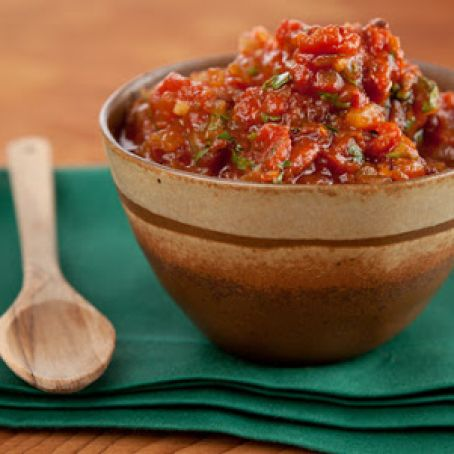
Picture fromnthe web illlustrates the
chunky nature of ranchero sauce

For a few years, a small group of neighbors used to hold occasional potluck parties that we called “Brinner parties,” brinner being our word for breakfast for dinner. I like the concept, because sometimes when I don’t know what I want for supper, scrambled eggs and bacon just fit the bill. So at these brinner parties, we got a wild assortment of eggs, breads, casseroles, fruit salads—the possibilities are endless.

The other day I fixed a casserole that I remember Jacob really liked when he was younger. He was late coming home from golf practice, so I never heard how he likes it now, but the rest of us thought it was grand. It puts together the things you want in a big breakfast—sausage, potatoes, eggs, and cheese.

Sausage casserole

2 lbs. ground sausage—you can choose according to your taste: mild, hot, sage, maple, whatever

1 (30 oz.) bag frozen, shredded hash browns

Salt and pepper

8 oz. sharp cheddar cheese, grated

6 large eggs, lightly beaten

1 cup whole milk (or half and half if you want to make it really rich)

2 Tbsp. chopped fresh chives, optional

You’ll have to cook the sausage and potatoes in batches, even in a large skillet. First brown the sausage until all pink is gone and it is crumbly. Drain off extra grease. Cook the potatoes, following the directions on the package. Season potatoes with salt and pepper to taste.

Mix together sausage, potatoes, and one cup of cheese, and spoon into a 9x13 lightly greased casserole dish.

Separately whisk eggs and milk. Pour evenly over ingredients in casserole dish and sprinkle remaining cheese on top.

Bake at 350o for 30 minutes. Sprinkle with chives for garnish, and let sit five minutes or so to collect itself.

I halved this, and it fed four of us with enough left over for a couple of breakfasts. The casserole can definitely stand on its own and does not need sauce, but I happened to have ranchero sauce on hand (leftover from Easter brunch). I spooned the sauce over my breakfast portion, and it was delicious—talk about gilding the lily.

This is my favorite ranchero sauce recipe, and the only one I’ve found that calls for scrambled eggs rather than poached (the latter are not popular in this house, though I love a good poached egg). You’ll note I’ve put optional by the green pepper—I do not like green pepper, and it does not like me, so I never cook with it. To me, it would totally alter (no pun intended) the taste. It’s better without, but I leave that up to you.

Ranchero sauce

½ lb. bacon, diced

1 6 oz can tomato sauce

1 large tomato, diced

2 Tbsp. chopped green pepper, (optional)

¼ cup water

3 green onions, sliced

1 clove garlic, minced

½ tsp. chili powder

½ tsp. salt

Sauté the bacon. I find it easiest to dice bacon before cooking rather than hope it gets crisp enough to crumble. It is even easier if the bacon is slightly frozen. Then you can use a butcher knife and dice several pieces at once.

Drain bacon on a piece of paper towel.

Combine remaining ingredients and simmer gently for ten or fifteen minutes. Return bacon to the sauce. Spoon warm sauce over almost anything that sounds good to you. Hmm—pasta?